



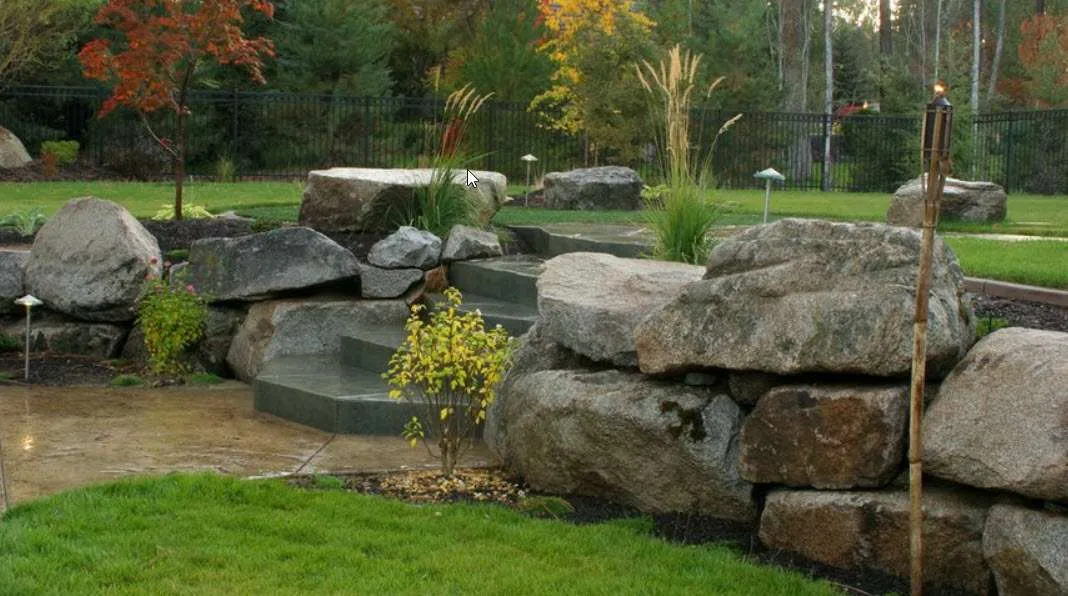
If you have ever seen a boulder wall built into a sloped East Texas yard and thought — that looks like it has always been there — that is exactly the point. A boulder wall is one of those landscape features that manages to be completely functional and completely natural-looking at the same time. It holds back soil, manages erosion, and creates usable flat space — all while looking like a feature of the landscape rather than something built into it.
For homeowners in Tyler, TX and the surrounding East Texas area, boulder walls are one of the most practical and visually striking retaining solutions available. They work with the natural terrain and the regional aesthetic in a way that manufactured block walls and poured concrete simply cannot replicate. And when they are designed and installed correctly by an experienced contractor, they are built to last for decades without deteriorating, fading, or requiring significant maintenance.
At Vicente Outdoor Living, we design and build custom boulder walls for homeowners throughout Tyler, Whitehouse, Bullard, Flint, Chandler, and all of East Texas. This guide covers everything you need to know — what boulder walls do, when they are the right choice, how they are installed, what they cost, and what separates a well-built boulder wall from one that fails.
What Is a Boulder Wall and How Does It Work?
A boulder wall is a retaining structure built from large natural stones — typically ranging from a few hundred pounds to several thousand pounds per stone — stacked or placed in a way that uses the weight and mass of the stones themselves to hold back soil.
Unlike segmental retaining wall block systems that rely on interlocking geometry and engineered design, boulder walls work primarily through gravity. The sheer weight and mass of the boulders, combined with the way they are placed against and into the slope, creates a structure that resists the pressure of the soil behind it naturally.
Boulder walls can be dry-stacked — meaning no mortar is used and the stones are placed to lock against each other purely through weight and friction — or they can be set with mortar between the stones for additional stability in taller or more structurally demanding applications.
In East Texas, where natural stone is abundant and the landscape has a rugged, wooded character, boulder walls fit the regional aesthetic perfectly. A well-built boulder wall in a Tyler, TX yard looks like it could have been placed there by nature — which is one of the reasons they are so consistently popular with East Texas homeowners.
What Problems Does a Boulder Wall Solve for Tyler, TX Homeowners?
Boulder walls are not just decorative — they solve real, practical problems that are common in East Texas yards. Here is what a boulder wall can do for your Tyler, TX property.
Stop Erosion on Sloped Properties
Erosion is one of the most common and most damaging yard problems for homeowners in the Tyler, TX area. East Texas clay soil is particularly vulnerable to erosion during heavy rain events — water runs down slopes, carries soil with it, and deposits it in places you do not want it. A boulder wall intercepts that process, stabilizing the slope and holding the soil in place even during the heavy rain events that East Texas is known for.
Unlike lighter retaining materials, boulders are heavy enough to stay in place even under significant hydraulic pressure from water moving through and around the slope. Their mass makes them naturally resistant to the forces that cause lighter retaining walls to shift or fail over time.
Create Usable Flat Space
A sloped backyard is a frustrating thing. It is difficult to landscape, impossible to furnish, and largely unusable for outdoor living. A boulder wall terraces a slope into flat, usable zones — creating space for a patio, a garden bed, a lawn area, a play space, or whatever your family needs most from your Tyler, TX backyard.
Even a relatively modest boulder wall — two to three feet tall — can transform a steep, unusable slope into a tiered outdoor living area with defined levels and functional flat ground. Combined with a paver patio on the lower level and planted beds on the upper level, a boulder wall turns a problem yard into one of the most beautiful and functional outdoor spaces in the neighborhood.
Manage Drainage on Clay-Heavy Soil
East Texas clay soil does not absorb water quickly. During heavy rain, water runs across the surface and accumulates at the base of slopes, around foundations, and in low areas of the yard. A properly designed boulder wall — with adequate drainage provisions behind it — redirects that water flow, channels it away from structures and foundation areas, and prevents the pooling and flooding that cause ongoing problems on many Tyler, TX properties.
Define Outdoor Zones and Add Visual Structure
Even on relatively flat properties, boulder walls can be used to create defined zones in the landscape — separating the lawn from a planting bed, framing a patio area, or creating a raised garden feature. A boulder wall does not have to be a large retaining structure to be effective — even a low, single-course boulder border creates visual definition and a naturalistic structure that manufactured materials struggle to match.
When Is a Boulder Wall the Right Choice for a Tyler, TX Yard?
Boulder walls are not the right solution for every retaining or grading situation. Here is when a boulder wall makes the most sense for a Tyler, TX property.
When the aesthetic calls for something natural — If your home has a wooded, naturalistic, or rustic character — common in many East Texas properties — a boulder wall fits the setting in a way that manufactured block or concrete does not. The organic, irregular appearance of natural stone complements native plantings, wooded lots, and the East Texas landscape in a way that feels authentic rather than constructed.
When the slope is significant — Boulder walls handle significant grade changes well because of their mass and weight. For taller retaining applications on steeper slopes — where a lighter segmental block wall would require extensive engineering and geogrid reinforcement — a boulder wall can be a more practical and more visually appropriate solution.
When you want a low-maintenance solution — Natural boulder walls require virtually no maintenance once they are installed. Unlike wood retaining walls that rot, painted surfaces that fade, or manufactured block that can chip and stain, natural stone boulders only get better looking as they age. Moss, lichen, and weathering give a boulder wall a character and patina over time that makes it look increasingly like part of the natural landscape.
When you want to add landscape value — A boulder wall is one of the most impactful landscape features you can add to a Tyler, TX property from a visual standpoint. It creates immediate visual interest, a sense of depth and dimension, and a naturalistic structure that makes the entire yard look more designed and more beautiful.
How Boulder Walls Are Built in East Texas
A boulder wall is not just a pile of rocks. A well-built boulder wall requires planning, equipment, and a contractor who understands how to place stone correctly to create a stable, long-lasting structure. Here is what the installation process looks like for a boulder wall in Tyler, TX.
Site Assessment and Planning
The first step is evaluating the slope, the soil conditions, the drainage patterns, and the load the wall will need to retain. The height and length of the wall, the size of the boulders needed, and any drainage provisions required are all determined during this planning phase. In East Texas, where clay soil and heavy rainfall create specific demands, this assessment is critical to building a wall that performs correctly over the long term.
Excavation and Base Preparation
The base of a boulder wall needs to be set into the ground — not just placed on top of it. Excavation creates a level, stable starting point for the first course of boulders. For taller walls, the base course is set below grade into undisturbed soil, creating a foundation that anchors the wall against the soil pressure behind it.
Drainage Provisions
Water management behind a boulder wall is essential for long-term performance. A properly built boulder wall includes crushed stone backfill behind the wall and — for taller walls or areas with significant water flow — a perforated drain pipe at the base that channels water away from the wall and prevents hydrostatic pressure from building up behind the stone.
Boulder Placement
This is where experience and equipment make the difference. Large boulders — often weighing thousands of pounds — are placed using an excavator or skid steer. A skilled operator places each boulder to lock against its neighbors, lean slightly into the slope, and create a stable, interlocking mass that works as a unified structure rather than a collection of individual stones.
Each course of boulders is set to step back slightly into the slope — a technique called batter — which significantly improves the wall's structural performance against soil pressure. Void spaces between boulders are carefully considered — too many large gaps and the wall loses structural integrity, but the natural spaces between stones allow water to drain through the face of the wall, reducing hydrostatic pressure.
Planting and Finishing
After the boulder wall is set, the spaces around and between the boulders can be planted with groundcovers, ornamental grasses, native perennials, or other plants that soften the wall and integrate it into the surrounding landscape. In East Texas, native plants that thrive in the spaces between stones — like creeping juniper, liriope, or native ferns — create a finished appearance that makes the boulder wall look like it has always been part of the yard.
Boulder Wall Design Ideas for Tyler, TX Homeowners
A boulder wall does not have to be a single straight run of stone. Here are some of the most popular boulder wall configurations and design ideas we build for homeowners throughout East Texas.
A tiered boulder wall system creates multiple levels in a sloped backyard — each level held back by a boulder wall, with flat usable space on each tier. The lowest tier becomes a patio or lawn area. The upper tiers become planting beds, garden areas, or lawn extensions. The whole system creates a yard with depth, dimension, and a level of design sophistication that a flat yard simply cannot achieve.
A boulder wall with a paver patio at its base is one of the most popular combinations we build at Vicente Outdoor Living. The patio provides the hardscaped outdoor living surface, and the boulder wall rises behind it — creating a natural backdrop that frames the space and makes the patio feel sheltered and defined.
A low boulder border around a landscape bed or garden area is a simple, naturalistic alternative to manufactured edging or timber borders. A single course of medium-sized boulders creates a clean, permanent edge that holds mulch in the bed, defines the boundary between lawn and planting area, and adds visual interest without the formality of a full retaining wall.
Boulder walls alongside a stream bed or drainage channel are both functional and beautiful — the boulders line the channel, slow water flow during heavy rain events, and create a natural-looking drainage feature that is far more attractive than a concrete or plastic drainage solution.
How Much Does a Boulder Wall Cost in Tyler, TX?
Boulder wall costs in Tyler, TX vary based on the size and weight of the boulders, the height and length of the wall, the accessibility of the site, and the amount of drainage work required. Here is a general range to help homeowners plan.
Boulder wall installation in Tyler, TX typically runs in the range of $50 to $150 or more per square foot of wall face depending on boulder size, site conditions, and design complexity. Larger boulders that require heavy equipment to place, walls on steep or difficult-to-access slopes, and walls that require significant drainage engineering will be at the higher end of that range.
Factors that affect your boulder wall cost include the size and source of the boulders, the height and length of the wall, site accessibility for equipment, the amount of excavation required, drainage provisions, and any planting or finishing work included in the project.
The best way to get an accurate number for your specific project is an on-site consultation with a Tyler, TX boulder wall contractor who can assess your slope, your soil conditions, and your drainage needs and provide a detailed, line-item proposal.
5 Things That Make a Boulder Wall Last in East Texas
A boulder wall built correctly will last for generations. Here is what separates a boulder wall that stands for decades from one that shifts, settles, or fails within a few years.
Proper base setting — The base course of boulders must be set into the ground — below grade — into undisturbed, stable soil. A boulder wall that starts at grade level with no base excavation has no anchor and will gradually migrate forward over time as soil pressure builds behind it.
Drainage behind the wall — Water buildup behind a boulder wall creates hydrostatic pressure that pushes the wall forward. Crushed stone backfill and a perforated drain pipe at the base of the wall are essential for long-term performance in East Texas clay soil.
Correct batter — Each course of boulders should lean slightly back into the slope — not stand perfectly vertical or lean forward. Even a few degrees of backward lean significantly improves the wall's resistance to the soil pressure behind it.
Interlocking placement — Boulders should be placed so that vertical joints between stones are staggered — not aligned. Aligned vertical joints create lines of weakness in the wall. Staggered joints distribute load across the wall and create a much stronger structure.
Right size boulders for the application — A boulder wall built from stones that are too small for the height and load it needs to retain will not perform. Matching boulder size to the structural demands of the wall is part of what a qualified contractor assesses during the planning phase.
Why Vicente Outdoor Living Builds Better Boulder Walls in Tyler, TX
At Vicente Outdoor Living, we design and build custom boulder walls for homeowners throughout Tyler, TX and all of East Texas. We understand the specific demands of East Texas terrain — the clay soil, the drainage challenges, the rainfall — and we build every boulder wall with the base preparation, drainage provisions, and placement quality that those conditions require.
We work with a range of natural stone options appropriate for East Texas properties and we have the equipment and experience to place large boulders correctly — creating walls that are structurally sound, visually stunning, and built to be part of your landscape for decades to come.
We serve homeowners in Tyler, Whitehouse, Bullard, Flint, Chandler, Lindale, Hideaway, Frankston, Palestine, Athens, Kilgore, Longview, Sulphur Springs, and all surrounding East Texas communities.

Dealing with a sloped yard, erosion problems, or just want to add a stunning natural feature to your Tyler, TX property? Vicente Outdoor Living designs and builds custom boulder walls for East Texas homeowners — functional, natural, and built to last. Request your free estimate today and let's find the right solution for your yard.


