



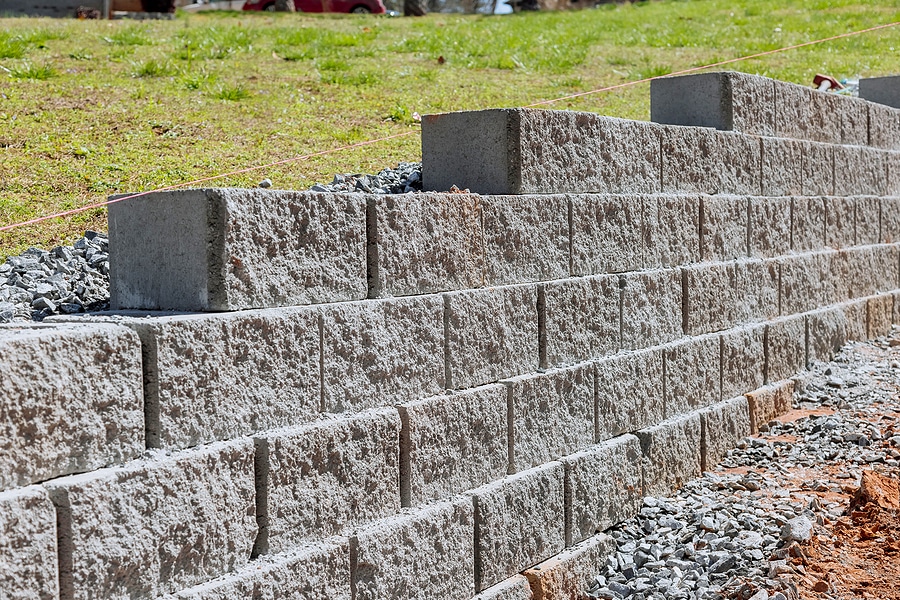
If your yard has a slope, a grade change, or areas where soil washes away every time it rains, a retaining wall is not just a landscaping feature — it is a necessity. For homeowners throughout Tyler, TX and the surrounding East Texas area, retaining walls solve real problems while adding serious visual structure and value to the property.
A well-designed retaining wall holds back soil, controls erosion, manages drainage, and levels out usable space in a yard that would otherwise be difficult to work with. Done right, it also looks incredible — becoming a defining design feature of your outdoor living space rather than just a functional fix.
At Vicente Outdoor Living, we design and build custom retaining walls for homeowners throughout Tyler, Whitehouse, Bullard, Flint, Chandler, and all of East Texas. This guide covers everything you need to know — from material options and costs to what makes a retaining wall structurally sound in East Texas soil conditions.
Why Retaining Walls Matter in Tyler, TX
East Texas presents some specific challenges when it comes to yards and grading. The soil in the Tyler, TX area is heavily clay-based, which means it holds water, expands when wet, and contracts when dry. That cycle of expansion and contraction puts significant pressure on any structure built to hold it back — which is exactly why retaining wall design and construction in East Texas requires real expertise.
Beyond soil conditions, Tyler and the surrounding area get significant rainfall that can cause serious erosion on sloped properties. Without a properly engineered retaining wall, that erosion does not just make your yard look bad — it can undermine your foundation, damage landscaping, and create drainage problems that get worse every season.
A properly built retaining wall stops all of that. It stabilizes the soil, controls water runoff, prevents erosion, and creates level usable space where there was once an awkward, unusable slope.
What Can a Retaining Wall Do for Your Tyler, TX Property?
Beyond the purely functional benefits, retaining walls do a lot more for a Tyler, TX property than most homeowners initially realize.
They create usable flat space — A sloped backyard is difficult to landscape, furnish, or enjoy. A retaining wall terraces the slope into flat, usable zones — perfect for a patio, a garden bed, a lawn area, or a play space.
They add visual structure to the yard — A well-designed retaining wall gives a yard definition and intentionality. It separates zones, frames garden beds, and creates a layered, designed look that dramatically improves curb appeal and overall property aesthetics.
They protect your home's foundation — Soil erosion near a home's foundation is a serious structural concern. A retaining wall that redirects water flow and stabilizes soil around the foundation protects one of your most significant investments.
They increase property value — A functional, well-built retaining wall adds real value to a Tyler, TX home. Buyers recognize the work and the benefit — especially on properties with significant grade changes where the retaining wall makes the yard actually usable.
Best Retaining Wall Materials for East Texas Homes
The material you choose for your retaining wall affects its appearance, its longevity, and its ability to handle the specific demands of East Texas soil and climate. Here is a breakdown of the most popular retaining wall materials we work with in Tyler, TX.
Concrete Block — CMU
Concrete masonry unit block is one of the most common and reliable materials for retaining walls in East Texas. It is strong, durable, cost-effective, and engineered to handle significant soil pressure. CMU walls can be finished with stucco, stone veneer, or left with a clean block look depending on the design. They are a workhorse material — not always the flashiest option but consistently one of the most dependable for structural retaining applications.
Segmental Retaining Wall Block
Segmental retaining wall systems — brands like Versa-Lok, Allan Block, and Belgard — are interlocking concrete block systems specifically engineered for retaining wall construction. They are designed to interlock and lean back slightly into the slope, which helps them manage soil pressure more effectively. Segmental block walls look clean and finished, come in a variety of textures and colors, and are one of the most popular choices for residential retaining walls in Tyler, TX.
Natural Stone and Boulders
Natural stone and boulder retaining walls have a rugged, organic look that fits beautifully in the East Texas landscape. Boulder walls in particular create a naturalistic appearance — stacked large boulders hold back significant soil while looking like they have always been part of the yard. Natural stone walls are a premium option that tends to age gracefully and complement landscaping exceptionally well.
For Tyler, TX properties with significant grade changes or more naturalistic landscape designs, a boulder wall or dry-stacked natural stone wall can be the perfect solution — both functionally and aesthetically.
Limestone
Limestone is a locally abundant material in East Texas and a natural fit for retaining walls in the region. It is strong, heat-resistant, and has a warm, natural appearance that looks right at home in a Texas yard. Limestone retaining walls can be dry-stacked or mortared depending on the height and structural requirements of the project.
Timber and Railroad Ties
Timber retaining walls are a lower-cost option for smaller grade changes. They work well for garden bed borders and minor slope corrections but are not appropriate for taller walls or areas with significant water exposure. In the humid East Texas climate, even pressure-treated timber has a shorter lifespan than masonry options — typically 10 to 15 years before replacement becomes necessary.
For any wall over two feet tall or in areas with significant drainage considerations, masonry is always the better long-term investment in Tyler, TX.
How Much Does a Retaining Wall Cost in Tyler, TX?
Retaining wall costs in Tyler, TX vary based on height, length, material, and the complexity of the site conditions. Here is a general range to help you plan.
A basic segmental block retaining wall for a residential yard typically runs in the range of $25 to $50 per square foot of wall face, installed. A natural stone or boulder wall is generally at the higher end of that range or above it. Timber walls are less expensive upfront but come with a shorter lifespan.
For a 4-foot-tall wall that is 20 feet long — a common residential application in Tyler, TX — you are looking at roughly $2,000 to $4,000 or more depending on material and site conditions.
Factors that affect your retaining wall cost include:
Wall height — Taller walls require more material, deeper footings, and often engineered drainage systems behind the wall. Cost increases significantly with height.
Wall length — More linear footage means more material and more labor.
Material selection — Timber is least expensive upfront. Segmental block is mid-range. Natural stone, boulders, and engineered systems are at the higher end.
Drainage requirements — A properly built retaining wall in East Texas always includes drainage — typically gravel backfill and a perforated drain pipe behind the wall. This is not optional if you want the wall to last.
Site access and excavation — Walls on steep slopes, in tight spaces, or areas requiring significant excavation or material removal cost more to build.
Engineered design — Walls over four feet tall typically require an engineered design and may require permits in Tyler, TX. Factor that into your planning.
5 Things That Make a Retaining Wall Last in East Texas
A retaining wall that fails is worse than no retaining wall at all — it creates a bigger mess to clean up and a bigger problem to fix. Here is what separates a wall that lasts decades from one that fails within a few years in the Tyler, TX climate.
Proper drainage behind the wall — This is the number one reason retaining walls fail. Water that builds up behind a wall creates hydrostatic pressure that eventually pushes the wall over. A quality installation always includes crushed stone backfill and a perforated drain pipe that channels water away from the base of the wall.
Correct footing depth — The base of your retaining wall needs to be set below the frost line and into stable soil. In East Texas, that means digging down to undisturbed ground and creating a level, compacted base before the first course of block or stone is set.
Proper batter — leaning into the slope — Retaining walls should lean slightly back into the slope they are holding — this is called batter. A wall that is perfectly vertical or leans forward is fighting the soil pressure instead of working with it. Even a slight lean back significantly improves structural performance.
Geogrid reinforcement for taller walls — Walls over three feet tall often benefit from geogrid — a mesh fabric that is buried in layers behind the wall and extends back into the slope. Geogrid ties the wall to the soil mass behind it, dramatically increasing the wall's ability to hold back heavier loads.
Quality materials from the start — In East Texas clay soil and humid conditions, low-quality timber or improperly rated block will not hold up. Use materials that are rated for retaining wall applications and installed according to the manufacturer's specifications.
Retaining Wall Ideas That Elevate Your Tyler, TX Yard
A retaining wall does not have to be just a wall. The best retaining wall projects we build at Vicente Outdoor Living serve a functional purpose while also becoming a design feature that elevates the whole yard. Here are some ideas that Tyler, TX homeowners love.
A tiered retaining wall system creates multiple flat levels in a sloped backyard — perfect for a patio on one level, a garden bed on the next, and a lawn area above. Each tier adds usable space and visual depth to the yard.
A retaining wall with a built-in seating ledge doubles as outdoor seating around a fire pit or patio area. The top course of stone or block becomes the seat, creating integrated seating that does not take up any additional floor space.
Retaining walls alongside a paver patio frame the outdoor living area and create a sense of enclosure that makes the space feel more like an outdoor room. Pairing stone retaining walls with a matching paver patio creates a cohesive, high-end look throughout the yard.
Planting beds built into or against a retaining wall add color, softness, and life to what could otherwise be a hard, utilitarian structure. Native East Texas plants in raised beds alongside a stone retaining wall look stunning and require minimal maintenance.
Why Vicente Outdoor Living Builds Better Retaining Walls in Tyler, TX
At Vicente Outdoor Living, we design and build custom retaining walls for homeowners throughout Tyler, TX and all of East Texas. We understand the specific challenges of building in East Texas — the clay-heavy soil, the drainage demands, the rainfall — and we engineer every retaining wall to handle those conditions for the long term.
We work with concrete block, segmental retaining systems, natural stone, boulders, and limestone to create walls that are structurally sound and visually right for your property. Every wall we build includes proper drainage, correct footing depth, and the right materials for the site conditions.
We serve homeowners in Tyler, Whitehouse, Bullard, Flint, Chandler, Lindale, Hideaway, Frankston, Palestine, Athens, Kilgore, Longview, Sulphur Springs, and all surrounding East Texas communities.

Dealing with erosion, a sloped yard, or drainage problems on your Tyler, TX property? Vicente Outdoor Living designs and builds custom retaining walls built for East Texas conditions. Request your free estimate today and let's find the right solution for your yard.


